

The more we learn about genetics, the more we realize how beautifully complex the story of human variation truly is. For many of us, our first introduction to genetics is in the classroom. As genomic science leaps forward, it is vital that science education keeps pace. A recently published paper in the Journal of Science Teacher Education highlights both the challenges and the exciting opportunities in updating how science is taught in order to reflect the complexity of modern genetics.
The 23andMe Research Institute is committed to more than just internal discovery; we aim to support and collaborate with professional educators in developing their own expertise in these complex principles. We were honored to have played a supporting role for these educators, and would like to share their work.
The Challenge: Teaching Complexity
The paper explores a fundamental shift in genetics education: moving from a “one-gene, one-trait” Mendelian model to an understanding of complex traits that are influenced by hundreds or thousands of genetic variants working in tandem with environmental factors.
Teaching this complexity isn’t easy. This case study followed a “co-design process” involving a middle school science teacher and educators from the University of North Carolina at Greensboro and the Exploratorium Museum in San Francisco working together to create professional activities for other science teachers to update how they teach more complex genetics.
Throughout this process the middle school teacher identified several challenges to teaching these complex topics, including:
- A lack of real-world examples tailored to hook students’ interest.
- Nuanced word choices that can be confusing when describing the relationship between genes and a trait.
- How and when to introduce core ideas and activities to help students build their understanding step-by-step.
A Collaborative Solution
In order to find interesting examples to capture students’ interest and to support further understanding of complex genetics, the co-design team was able to call on 23andMe Research Institute scientists to share data and real-world examples from research studies of complex traits. In the end the co-design team developed a classroom activity, using height as a relevant example, to demonstrate the impact of multiple genetic variants on a trait.
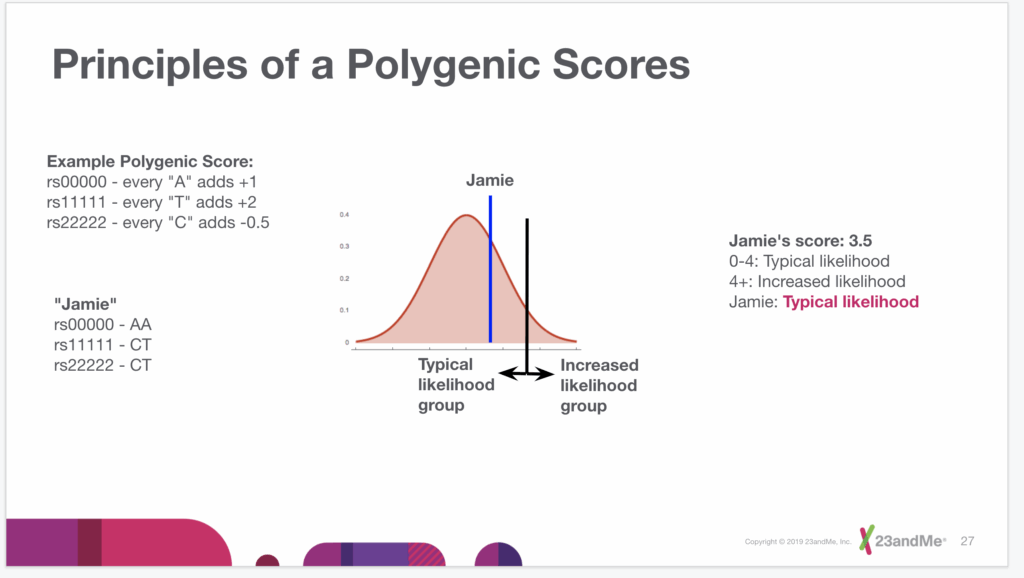
“By providing a space for teachers to work directly with scientists, we create opportunities for them to engage with authentic data and nuanced examples of complex inheritance,” said Hilleary Osheroff, of the Teacher Institute at the Exploratorium, one of the authors of this study.
Co-author Sara Porter, from the Teacher Education and Higher Education Department at University of North Carolina at Greensboro added, “This collaboration allows educators to bridge the gap between abstract theory and classroom practice without the need for extensive time in the laboratory, ultimately empowering them to bring the most current genomic science to their students.”
Why It Matters
The importance of robust science education throughout the K-12 years cannot be overstated. By providing students with a more accurate framework for how genetics works, we empower the next generation to better understand their own health and the diversity of the human experience.
“At the 23andMe Research Institute, we believe that genetic literacy is a fundamental tool,” says Anne Greb, Director of Genomics Education at 23andMe. “Engaging in community projects like this that support early science education is a priority for us. By supporting teachers today, we are ensuring that the scientists, healthcare providers, and informed citizens of tomorrow have a clear-eyed understanding of the science that connects us all, from understanding their own traits and disease risks to recognizing the genetic relatedness that connects people.”
The responsive nature of the co-design process described in the paper shows that when scientists and teachers work together, they create a “resource-rich” environment. We are proud to have played a role in this research and remain dedicated to helping bridge the gap between the lab and the classroom.
Interested in helping a young person in your life learn more about genetics? Check out more educational activities from the Exploratorium and the 23andMe Genetics Learning Hub.


