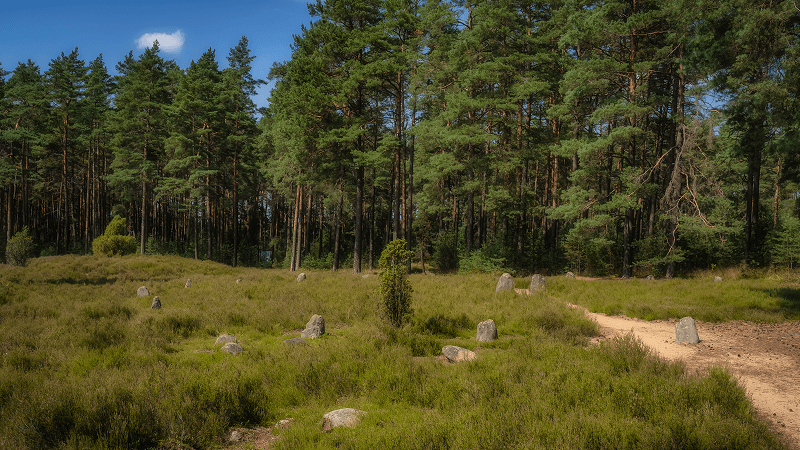

High on a vertical cliff face on the Yun-Gui Plateau of southwest China, you can find the entrance to Pingtang Cave. For centuries, this remote site held a somber secret: the remains of dozens of individuals scattered within its deepest, oxygen-poor reaches.
Now, thanks to a new study published in the Journal of Archaeological Science earlier this year, the stories of these individuals are coming to light. This month, 23andMe is adding four individuals from this cliff-side site to our Historical MatchesSM feature.
A Landscape in Transition
During the 14th century, the Yun-Gui Plateau was a region of immense cultural and political transformation. As the Ming Dynasty sought to consolidate power and expand its borders into the southwest, the area became a frontier of conflict. The rugged karst landscape, characterized by its towering limestone cliffs and deep river valleys, served as both a strategic stronghold for the military and a vital sanctuary for local communities caught in the crossfire of imperial expansion.
Historically known for its incredible ethnolinguistic diversity, the plateau was home to various indigenous groups who had inhabited these mountains for millennia. The transition between the Late Yuan and Early Ming periods in the 14th century brought an influx of new people and upheavals in local government, creating a complex social tapestry. For the families found in Pingtang Cave, these remote, high-altitude caverns were not just geological features—they were essential places of refuge during a time of profound uncertainty.
A Refuge, Not a Cemetery
When researchers first investigated Pingtang Cave, they quickly realized this was no ordinary burial ground. Unlike traditional sites of the era, there were no coffins, no grave goods, and no signs of formal interment. Instead, the skeletons were found in the deepest recesses of the cave, far from the light of the entrance.
While most of the group appeared to be healthy prior to entering the cave, the genetic analysis revealed that one individual was suffering from paratyphoid fever, caused by the bacterium Salmonella enterica. Her genome also revealed that her parents were likely closely related, perhaps as closely as second cousins, a finding that provides unique insight into the social and mating structures of isolated plateau communities during this era.
The lack of physical trauma or signs of violence ruled out a massacre, while the absence of a widespread plague suggested something else entirely. Researchers believe these families fled to the cave to escape external conflict, perhaps the unrest of the Ming Dynasty’s expansion into the region, only to succumb to the low oxygen of the cave’s deepest chambers.
The Families of Pingtang Cave
The genetic data reveals that those who fled to the cave were not strangers; they were a tightly-knit community of relatives. Most of these individuals shared the same maternal lineage (haplogroup M7b1a1), suggesting that the group was a multi-generational family, who were connected through a shared maternal lineage.
A Window into Heritage
All of the members of this group shared a similar ancestral profile, characterized by a mixture of ancient northern and southern East Asian ancestry. This genetic signature persists today in the present-day inhabitants of southwest China, bridging the gap between the people living during the transition into the Ming Dynasty and the modern world.
Learn More
23andMe+ Premium™ members can now explore whether they share a genetic link to these ancient Chinese individuals, and hundreds of others, through the Historical Matches feature.