

Key Takeaways
|
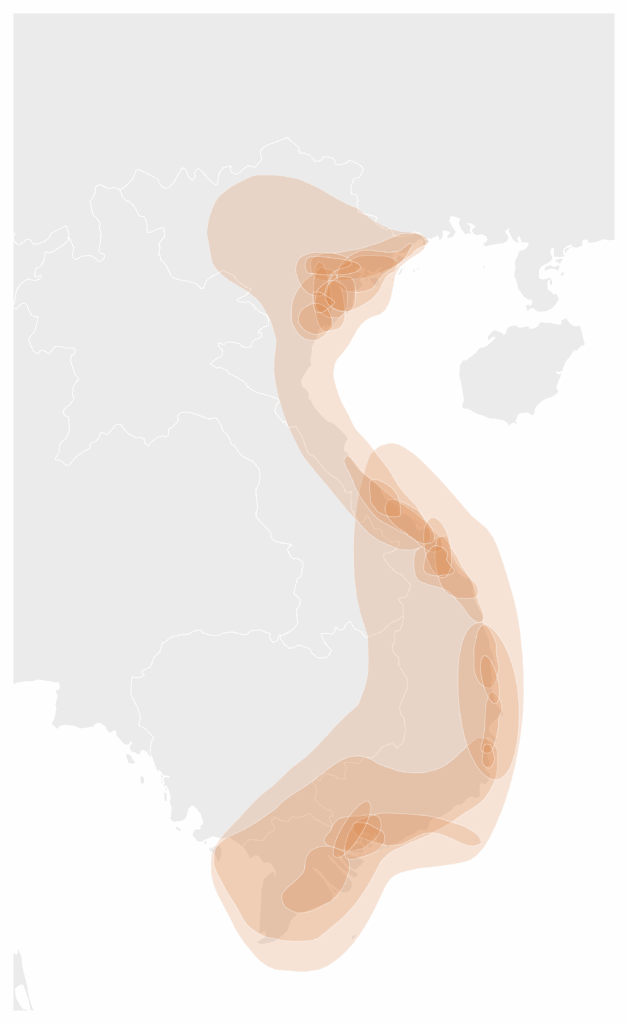
May is Asian American, Native Hawaiian and Pacific Islander Heritage Month, a time to celebrate the histories, cultures and contributions of communities whose roots span the Pacific. To mark the occasion, 23andMe is adding 31 new Vietnamese Genetic Groups to its Ancestry Composition feature, offering members with Vietnamese heritage their most detailed view yet of where in Vietnam their ancestors likely came from.
A Closer Look at Vietnamese Ancestry
Vietnam’s geography has long shaped its people. The country stretches more than 1,000 miles along the eastern edge of Southeast Asia, threading through highlands, river valleys and two great deltas. For centuries, those landscapes have channeled migration, trade and family ties, and they may show up in your DNA, too.
Genetic Groups are clusters of people who share more recent DNA with one another than with the broader population, often because their families lived in the same region for many generations. By analyzing patterns of shared DNA across thousands of 23andMe members of Vietnamese descent, our clustering algorithm identifies regional signatures finer than a single “Vietnamese” label can capture. If you have Vietnamese roots, you may now see groups anywhere from the Mekong Delta in the south to the Red River Delta in the north. These groups reflect the long shared history of families and communities, not modern political boundaries.
Most members with Vietnamese ancestry will receive at least one of these Genetic Groups, and 23andMe+ Premium™ members also get the ability to see groups they may have more distant matches to, opening a wider view of regional connections.
A Growing Picture of Asia
Vietnam joins a growing set of Asian representation in 23andMe’s Ancestry Composition. In recent years, 23andMe has added Genetic Groups in the Philippines, China, Korea and Mongolia, Japan and South Asia.
More groups across Southeast Asia and the Pacific are on the way.
There are also connections throughout Asia in the Historical MatchesSM feature, which compares your DNA to people who lived hundreds or even thousands of years ago. Recent additions include ancient individuals from southwest China and ancient China, a 6th-century cross-border couple and the mysterious skeletons of Roopkund Lake in the Himalayas.
Connecting to Your Health Journey
Your ancestry is one part of the picture. 23andMe also offers reports on many health conditions relevant to people of Asian heritage, such as coronary artery disease, diabetes and high blood pressure. In addition, several 23andMe health reports examine specific genetic variants that are more common in certain Asian populations.
- The Nonsyndromic Hearing Loss and Deafness, DFNB1 (GJB2-Related) Carrier Status report* looks at variants in the GJB2 gene that can cause one of the most common inherited forms of hearing loss. Up to 1 in 4 people of East or Southeast Asian descent are carriers for this condition, and this report includes variants that are more common for them as well as those of South Asian descent.
- The CYP2C19 Drug Metabolism report** can tell you about genetic variants that can affect how your body processes certain medications for heart disease, depression, acid reflux, and other conditions. Some of these variants are more common in people of East Asian descent than in other populations.
- The Alcohol Flush Reaction report examines a variant in the ALDH2 gene that’s common across East Asia and affects how the body breaks down a toxic byproduct of alcohol.
Expanding the Map of Asian Heritage and Health
The future of genetics depends on the diversity of stories powering it. This Asian American, Native Hawaiian and Pacific Islander Heritage Month, explore your Genetic Groups (new and old), Historical Matches and personalized reports, and see what your heritage reveals. 23andMe members who choose to participate help build a product that reflects the full breadth of the human experience. Already a 23andMe member? Sign in to discover your new regional connections, and celebrate your unique story.
* The 23andMe PGS test uses qualitative genotyping to detect select clinically relevant variants in the genomic DNA of adults for the purpose of reporting carrier status and reporting and interpreting genetic health risks. The relevance of each report may vary based on ethnicity. Our carrier status reports can be used to determine carrier status, but cannot determine if you have two copies of any genetic variant. These carrier reports are not intended to tell you anything about your risk for developing a disease in the future or anything about the health of your fetus, or your newborn child’s risk of developing a particular disease later in life. For certain conditions, we provide a single report that includes information on both carrier status and genetic health risk. The Nonsyndromic Hearing Loss and Deafness, DFNB1 (GJB2-Related) carrier status report is indicated for the detection of eight variants in the GJB2 gene. The report can tell you if you have two copies of some tested variants, and if you are at risk of having hearing loss related to DFNB1, but does not describe your overall risk of having DFNB1-related hearing loss. This test is relevant for people of many, but not all, ethnicities.
** 23andMe PGS Pharmacogenetics reports: The 23andMe test uses qualitative genotyping to detect 3 variants in the CYP2C19 gene in the genomic DNA of adults from saliva for the purpose of reporting and interpreting information about the processing of certain therapeutics to inform discussions with a healthcare professional. It does not describe if a person will or will not respond to a particular therapeutic and does not describe the association between detected variants and any specific therapeutic. Our CYP2C19 Pharmacogenetics report provides certain information about variants associated with metabolism of some therapeutics and provides interpretive drug information regarding the potential effect of citalopram and clopidogrel therapy. Results for certain CYP2C19 results should be confirmed by an independent genetic test prescribed by your own healthcare provider before taking any medical action. Warning: Test information should not be used to start, stop, or change any course of treatment and does not test for all possible variants that may affect metabolism or protein function. The PGS test is not a substitute for visits to a healthcare professional. Making changes to your current regimen can lead to harmful side effects or reduced intended benefits of your medication, therefore consult with your healthcare professional before taking any medical action. For important information and limitations regarding Pharmacogenetics reports, visit 23andme.com/test-info/pharmacogenetics/