
Long-distance relationships are nothing new. In the 6th century, the Silk Road was the ultimate connector: a thousands-of-miles-long highway spanning from Asia to Southern Europe, that brought people, religions, and traditions together. This Valentine’s Day, we’re looking at the story of a partnership that emerged from this ancient trade route.
In 2005, archaeologists discovered a joint tomb just outside the ancient Chinese capital of Chang’an (modern-day Xi’an). According to inscriptions found at the site, the tomb belonged to a man named Li Dan and his wife, a couple who had been laid to rest there approximately 1,500 years ago.
While a DNA test cannot technically “prove” if two people were in love, their shared burial and the unique mix of designs inspired by two distinctive cultures found on their tomb suggest a connection that defied geographical barriers.
A Mystery Written in Stone
For centuries, the story of this couple was a riddle hidden in plain sight. Li Dan’s funeral inscription made two contradictory claims: it stated he was a descendant of prestigious Chinese aristocratic clans, yet it also identified his father and grandfather as Brahmins from ancient South Asian kingdoms.
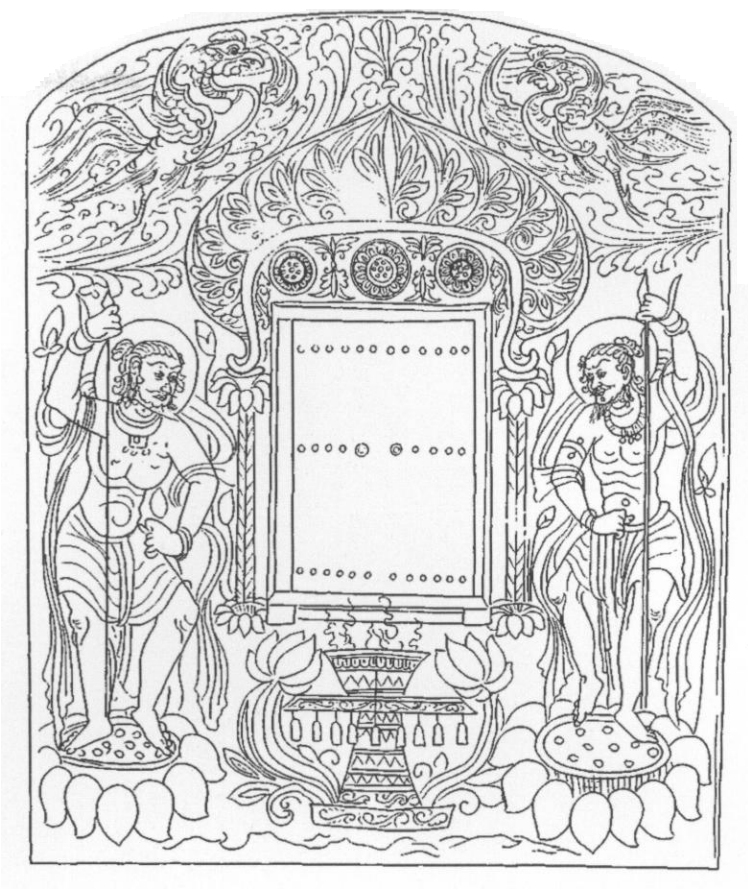
The rest of the tomb only added to the mystery, as it featured a fusion of cultures. Although the tomb was built in a traditional Chinese architectural style, it was decorated with a mixture of local mythical figures, like the Four Divine Beasts, and foreign guardians that resembled Buddhist statues from India. Even more striking was the discovery of a gold coin from the Eastern Roman Empire found in the wife’s mouth—a custom common along the Silk Road but far from the local norm.
A Cross-Border Connection Written in DNA
Late last year, a team of researchers decided to study the couple’s DNA to help resolve the contradictions found in their tomb. The results provided the first direct genomic evidence of a 6th-century couple with such distinct ancestral backgrounds.
Genetic analysis revealed that Li Dan had northern South Asian ancestry. His genetic profile showed broad similarities to present-day Brahmin groups, supporting the inscriptions on his tomb suggesting his family belonged to this community. In contrast, his wife’s ancestry was local to Chang’an, tracing back to ancient farmers of the Middle Yellow River in northern China. The unique mix of Chinese and South Asian influences discovered in their tomb reflects a blending of cultures that likely characterized their lives.
A Home at the Heart of the World
We may never know how they felt about each other, but their tomb tells us how they may have lived. Li Dan was a high-status traveler who arrived in Chang’an to expound Buddhist scriptures after studying in the kingdom of Jibin. Rather than remaining an outsider, he settled down, married a local woman, and adopted a Chinese surname, all while keeping the traditions of his homeland alive.
This Valentine’s Day, their story reminds us that even 1,500 years ago, the most enduring connections can bridge different worlds.
Learn More
Want to see if you’re genetically connected to this ancient couple, or to hundreds of other historical individuals? The Historical MatchesSM feature is available to 23andMe+ Premium™ members.