Key Takeaways
|
This July 4th, as America celebrates its 250th birthday, we’re adding 29 individuals from the nation’s founding era to the Historical Matches® feature. Their DNA connects them to more than 1.3 million consented 23andMe research participants members.
But here’s the remarkable part: one of them was lost to history until your DNA helped name him again.
Lost Colonists, Now Discoverable
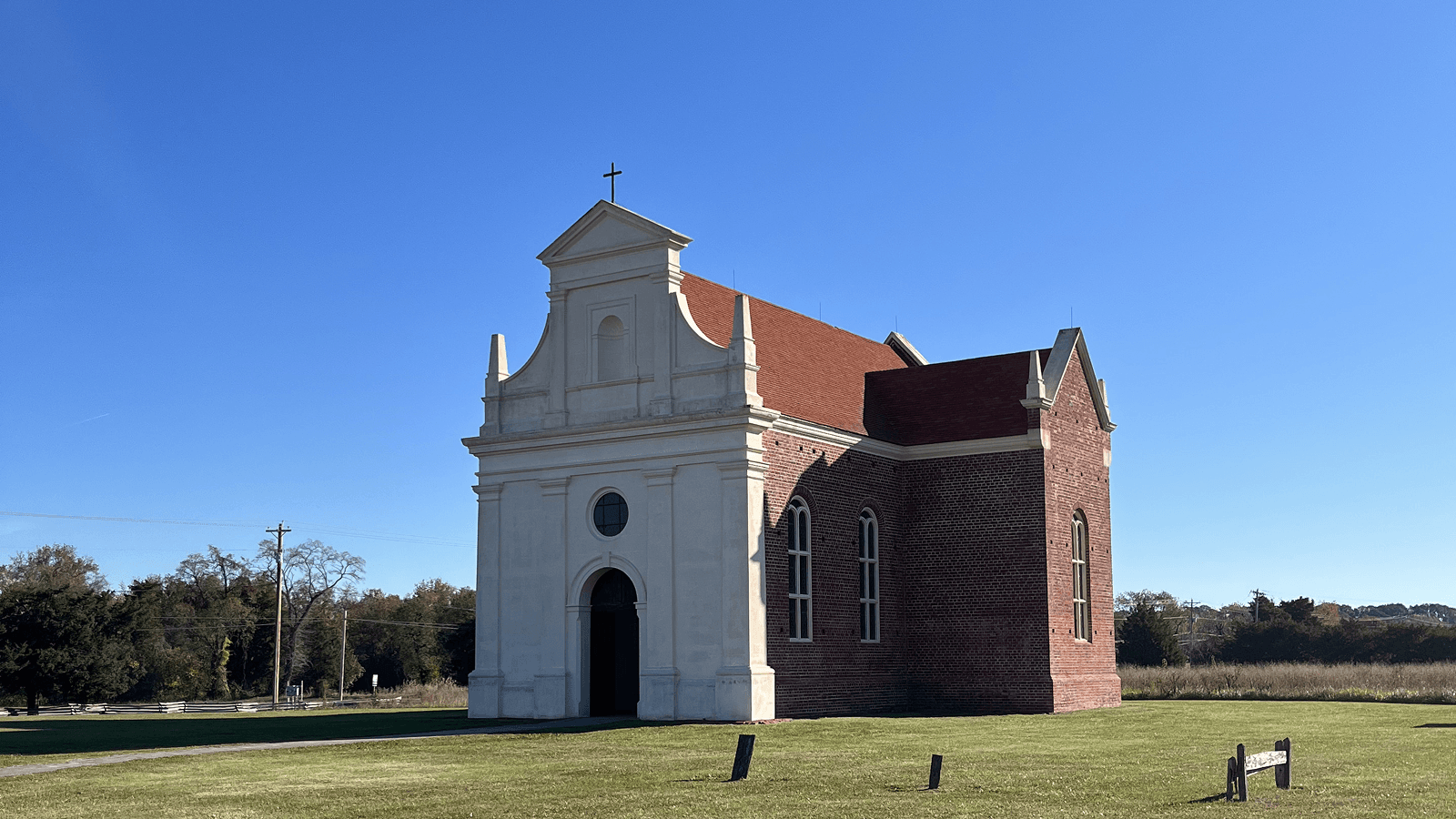
In May, we shared the story of a groundbreaking study published in Current Biology. 23andMe researchers, working with colleagues at Harvard University, the Smithsonian Institution’s National Museum of Natural History and Historic St. Mary’s City, analyzed the DNA of 49 individuals buried at St. Mary’s City, Maryland, the first colonial capital of Maryland, founded in 1634.
We compared their DNA to millions of consented 23andMe research participants. We found that more than 1.3 million 23andMe research participants share DNA with at least one of the St. Mary’s individuals.
The strongest genetic connections were to participants with ancestry from western England and Wales, consistent with the likely origins of many of the colony’s earliest residents. Several individuals also showed strong connections to Ireland, lending weight to historical accounts of Irish settlers among the founding colonists.
Among the burials at St. Mary’s City’s Chapel Field cemetery was a man whose identity had been lost to time. By analyzing his skeletal remains, we knew roughly his age at death, date of death, and where he was born, but his name was lost. That is, until we used genetic data to find him.
The Story Participants Helped Solve
This individual, known as Burial 56, left DNA that allowed us to search across our database for genetic relatives living today. When we compared his DNA to thousands of consented research participants, several thousand shared genetic connections with him. We then looked at the family trees of two 23andMe research participants with the strongest genetic links and found the same name appearing in both: Leonard Greene.
Leonard’s story aligned with what we knew about Burial 56. He was the son of Thomas Greene, Maryland’s second governor, and Anne Cox—who were both reidentified as burials in the Chapel Field cemetery through their genetic connection to Leonard. This marked the first time ancient DNA has been used to identify unknown historical individuals without any prior hypothesis about who they might be.
Today, Leonard Greene is one of 29 colonists whose stories you can now explore through Historical Matches.
The Path from Maryland to Kentucky
When researchers looked at who shares DNA with the St. Mary’s colonists today, they also found that 23andMe participants with roots in Kentucky showed strong genetic connections with these early Maryland settlers.
This pattern has a historical explanation. After the Revolutionary War, many Maryland Catholic families faced economic hardship and mounting religious pressure. Between roughly 1780 and 1820, many migrated to Kentucky, where they established communities in what are now Nelson and Washington counties. Nearly four centuries after their ancestors first set foot at St. Mary’s City, the genetic echo of that migration is still visible in your DNA.
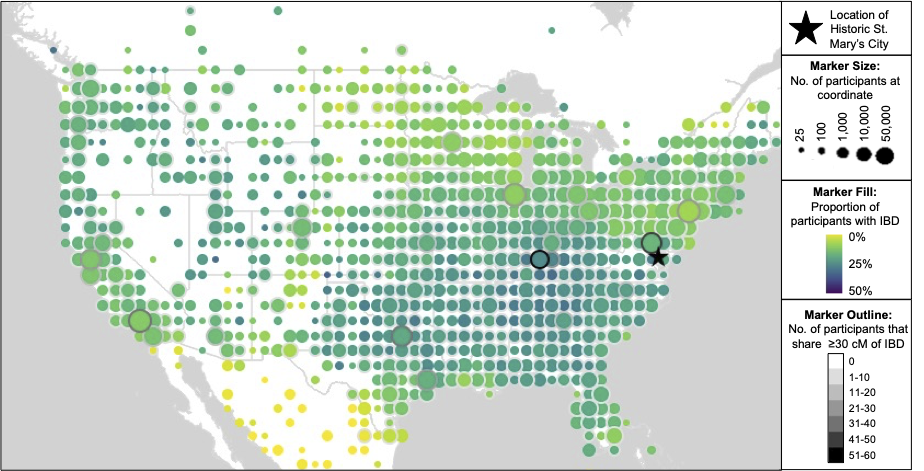
If your family has deep Kentucky roots, you might find you have connections to these new Historical Matches.
Learn More
The colonists at St. Mary’s City came from Great Britain and Ireland, seeking religious freedom and opportunity in a new world. Their names are being restored. Their stories are being recovered. And now, 23andMe+ Premium™ members can explore whether they share a genetic connection to the founding colonists of St. Mary’s City, and hundreds of other historical individuals, through the Historical Matches feature.