
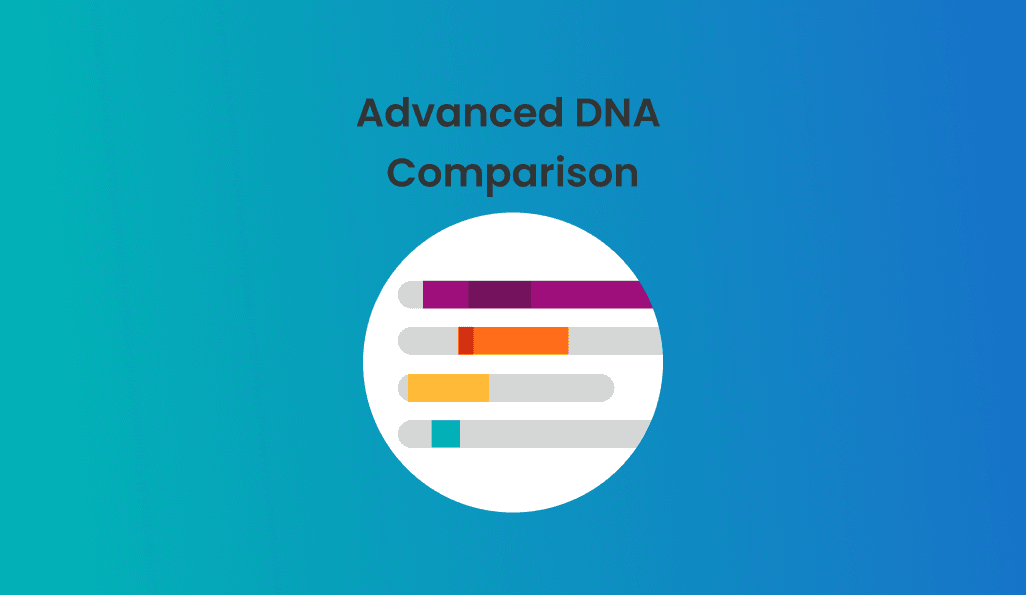
DNA is more than just a list of percentages, it’s a map of your history that connects you to the people who came before you and the living relatives who share your journey. Today, we are excited to announce the reintroduction of a fan-favorite tool, Advanced DNA Comparison, now powered by our most sophisticated technology yet.
For 23andMe+ Premium™ members, this feature allows you to look under the hood of your genetic matches and move from “we are related” to “here is how we fit together.” While features like DNA Relatives may tell you that you are genetically related to someone, Advanced DNA Comparison shows you exactly where that shared DNA lives on your genome. Whether you are piecing together a complex family mystery, building out your family tree, or simply trying to understand how you are connected to a new match, this tool gives you a way to start mapping your history with unprecedented precision.
What is Advanced DNA Comparison?
This feature allows you to visualize the specific segments of DNA you share with your relatives.
By identifying these shared blocks of genetic code, you can start performing deep-dive genealogical research. 23andMe+ Premium members can:
- View Segment Locations: See the start and end points of shared DNA between you and a DNA relative or connection across all 23 chromosomes.
- Compare Multiple People: Analyze shared segments with up to five relatives at once to identify common ancestors.
- Uncover “Triangulation”: Find overlapping segments among multiple matches to help determine which branch of your family tree a new relative belongs to.
Powered by HybridIBD Technology
The reintroduction of this tool isn’t just a simple “unlock” of old software. We’ve rebuilt the engine using our enhanced HybridIBD™ technology. This advanced algorithm combines two different types of IBD analysis (phasedIBD and IBD64) to detect shared segments with higher precision than ever before. This is especially helpful for correctly identifying distant relatives, and for identifying more close relationships for members with South Asian, West Asian, or North African ancestries.
Each time you compare new individuals, you’re running a custom analysis. We regularly update our phasing algorithms to improve DNA comparisons, and computing your results in real-time ensures high precision and up-to-date insights.
Why the Detail Matters
Why look at segments instead of just percentages? Because the length and location of shared DNA tell a story:
- Recent vs. Distant: Generally, longer segments indicate a more recent common ancestor. Multiple short, “choppy” segments across the genome often suggest more distant, population-wide sharing.
- Mapping Your Tree: If you and two other cousins all share the exact same segment, it’s a “smoking gun” that you all inherited that DNA from the same specific ancestor.
Privacy and Security First
We know that your genetic data is your most sensitive information. We’ve redesigned this feature with a “Security-First” architecture to ensure you remain in total control of what you share:
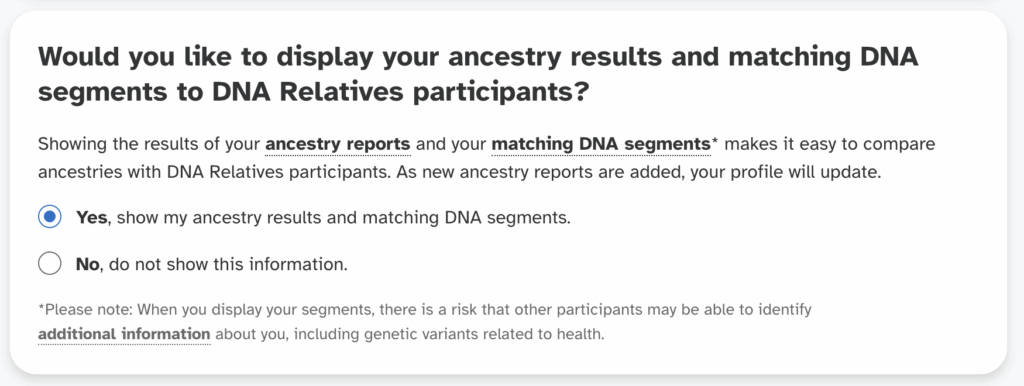
- Explicit Consent: You can only see segments for DNA Relatives who have specifically opted into sharing matching DNA segments, or with connections who have chosen to share with you.
- Personalized Comparison: You can only compare your own profile (or profiles you manage within your account, or connected profiles) against your DNA relatives and connections.
- Total Control: You can opt-in or opt-out of segment sharing at any time through your DNA Relatives settings or by managing your connections.
- Proactive Safeguards: Built-in protections help prevent attempts to misuse this feature to view others’ information while maintaining the functionality for it to be used as intended.
How to Get Started
If you are already a 23andMe+ Premium member, you can find the Advanced DNA Comparison tool under “Family & Friends” today.
Not a Premium member yet? Upgrading gives you immediate access to this feature, along with advanced DNA Relatives filters, DNA Relatives Clustering, the Historical MatchesSM feature, Distant Genetic Groups, and innovative health reports.